
How did modern numerical analyses—FEM and CFD—help in the development of an intelligent cooling system for a blast furnace?
In an era of growing demands to reduce energy and water consumption as well as CO2 emissions, the design of smart cooling systems for metallurgical units has become one of the key challenges facing the metallurgical industry.
The task of the CIM-mes Projekt team was to conduct research and development work on the project: “Development and demonstration of a smart cooling system for a metallurgical unit through the closure and integration of water circuits, while increasing the operational reliability of the metallurgical process and improving the efficiency of industrial cooling water use,” implemented under Measure 1.1 “Enterprise R&D Projects” of the Intelligent Development Operational Program 2014–2020, co-financed by the European Regional Development Fund.
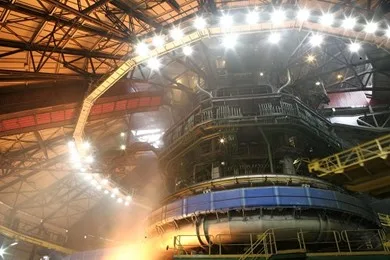
The main purpose of the cooling system is to dissipate the heat generated by the extremely high temperatures of the blast furnace process to prevent overheating and damage to the furnace structure, which could lead to pig iron solidification and failure.
Using computational methods (FEM and CFD), simulations were prepared showing how individual components of the cooling system behave under various operating scenarios and connection configurations—both in terms of thermal performance and structural strength. Due to the nature of the research, the work was carried out in close cooperation with the client.
Stage 1. Thermal Model and Data Analysis
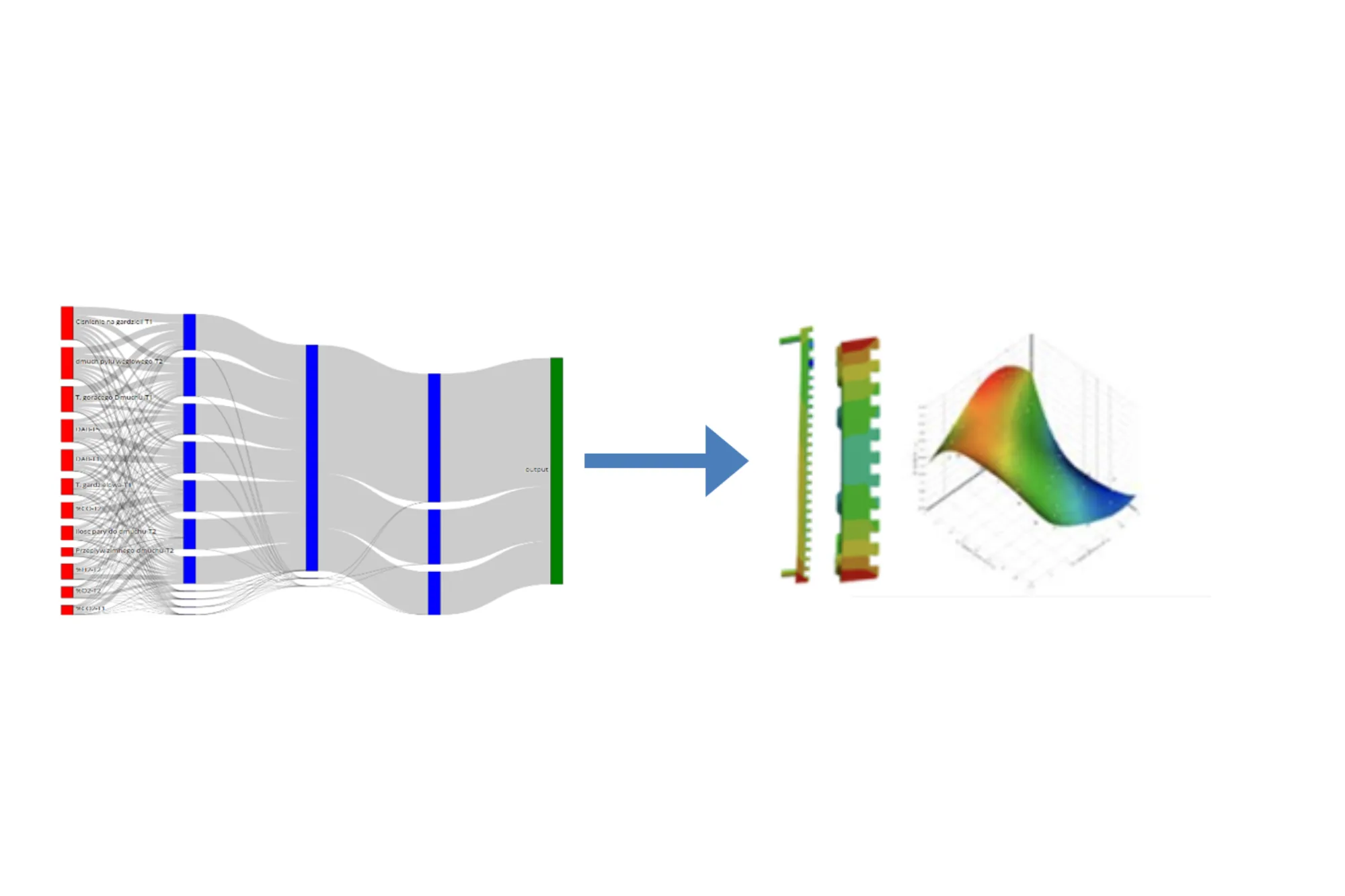
Initially, a thermal model of the steelmaking unit was developed. First, a review of the literature and research studies on blast furnace modeling was conducted, followed by the analysis and processing of measurement data from the furnace monitoring system.
Due to the large volume of data, a “black box” model was developed using an Artificial Neural Network (ANN). This model was used to generate the thermal loads on the cooling plates, which were analyzed in the subsequent phase of the project.
Stage 2. CFD and FEM Models of Individual Plates
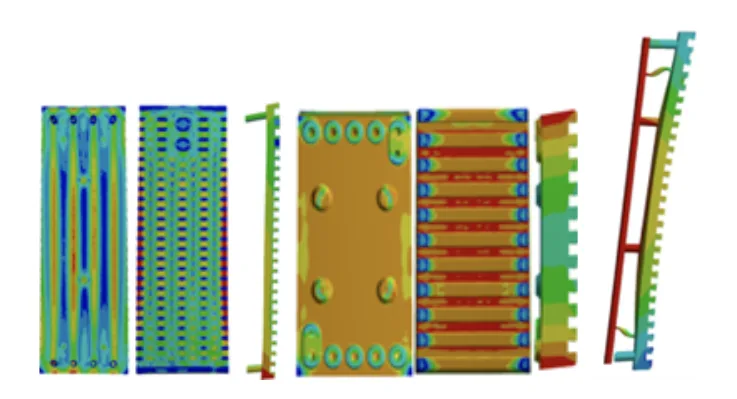
In subsequent stages, numerical models were developed: computational fluid dynamics (CFD) and finite element method (FEM) models of individual cooling plates. Detailed analyses made it possible to accurately characterize their behavior and identify opportunities for optimization aimed at extending their service life.
Thanks to CFD simulations, it was possible to quickly and precisely determine temperature distributions in various parts of the plate for different configurations and degrees of wear. In the FEM thermal-structural analyses, the specific effect of “reverse” warping of the plates was modeled, which allowed us to assess whether and how modifications could extend service life.
Schedule free consultation with us
See how we can help your team work faster, without additional risk or cost.
Step 3.Model of Power Supply and Topology Software
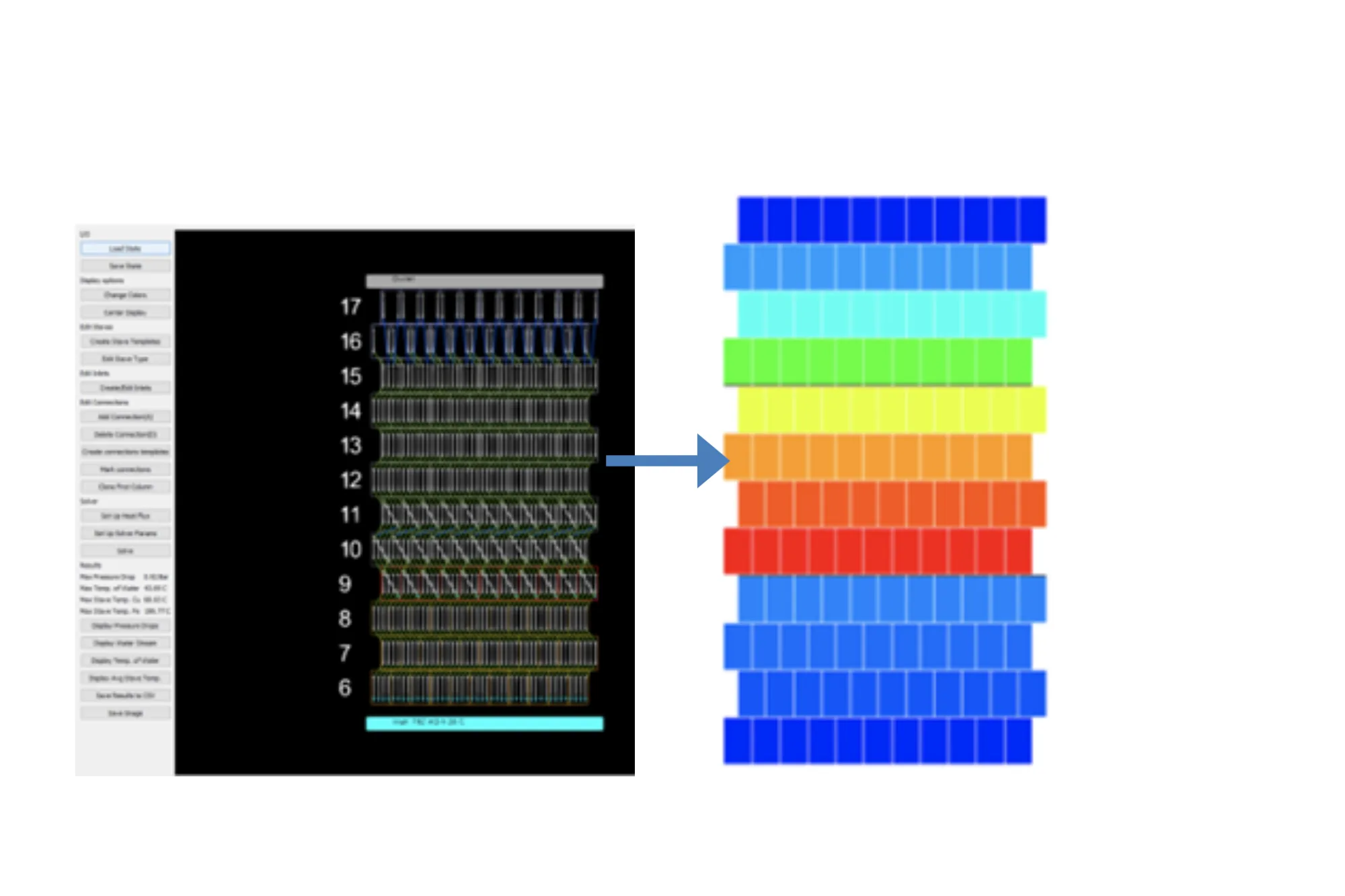
The final step involved developing a model for the supply and drainage of water from the cooling plates. It utilizes simplified models of the plates prepared based on earlier thermal-fluid simulations.
To fully exploit the model’s potential, dedicated software was developed to verify and optimize the cooling system topology. The tool was also used in development work—to assess the correct operation of a new cooling system for a metallurgical unit based on results from a demonstration installation.
Summary
Advanced CFD and FEM analyses in this R&D project enabled a thorough evaluation of the cooling system components and provided reliable data for informed design decisions. The results obtained were used to develop an application for verifying various cooling system topologies.
A key factor in the project’s success was the CIM‑mes Projekt team’s experience in executing grant-funded projects, which enabled a smooth and flexible response to changes and challenges.
We encourage manufacturers to utilize CIM-mes Projekt’s modern analytical tools. We provide support at every stage of product design and optimization, including research and development.
This project falls within the realm of innovation. Without the skills, knowledge, and dedicated software used by CIM-mes, we would not have been able to achieve the results needed to design an optimal cooling system.

Book a meeting with us and get your training course today
Book a meeting with us!