
PITAGORAS – Energy Management System
PITAGORAS – Energy Management System Development by CIM-mes
Abstract
PITAGORAS (Sustainable urban Planning with Innovative and low energy Thermal And power Generation frOm Residual And renewable Sources) was a research and innovation project co-funded by the European Commission under the 7th Framework Programme (FP7). The project demonstrated large-scale recovery of industrial waste heat and integration of renewable energy sources into urban district heating networks, with implementation at two demonstration sites: Brescia (Italy) and Kremsmünster (Austria).
CIM-mes Projekt participated in Work Package 2 (System Concept Assessment and Final Design) as the leader of Task 2.8, responsible for developing a self-learning, AI-based Energy Management System (EMS) for both demonstration sites. The EMS was built on Artificial Neural Network (ANN) models trained on full-scale plant simulations and progressively re-trained on real monitoring data. At the Kremsmünster site, simulation results showed that simple control modifications reduced total heat production costs by approximately 6%, while the optimisation module reduced operating costs by up to 27%. The developed EMS architecture also enabled integration of distributed prosumer nodes into the district heating network, with 37% of heat supplied from waste heat and 29% from renewable sources in the presented simulation scenario.
Introduction
Project background and objectives
The PITAGORAS project addressed the challenge of integrating industrial waste heat and renewable energy into urban energy systems. The central objective was to demonstrate a cost-effective, large-scale energy generation system that would allow sustainable planning of low-energy city districts through smart thermal grids connecting industrial parks with residential areas.
The consortium selected two geographically distinct demonstration sites to test and validate system concepts under real operating conditions:
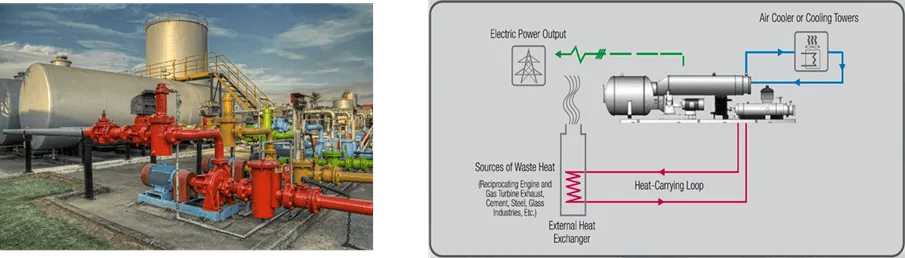
- Brescia, Italy – ORI Martin steel foundry, where waste heat from the production process was to be recovered via an Organic Rankine Cycle (ORC) unit to generate both heat and electricity.
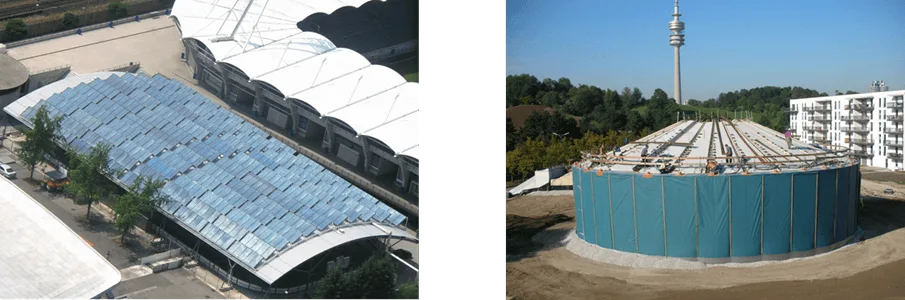
- Kremsmünster, Austria – RAG site, where a large-scale solar thermal plant with seasonal thermal energy storage (TES) was to be connected to a combined heat and power (CHP) plant and an industrial waste heat source via a district heating network.
Work package structure
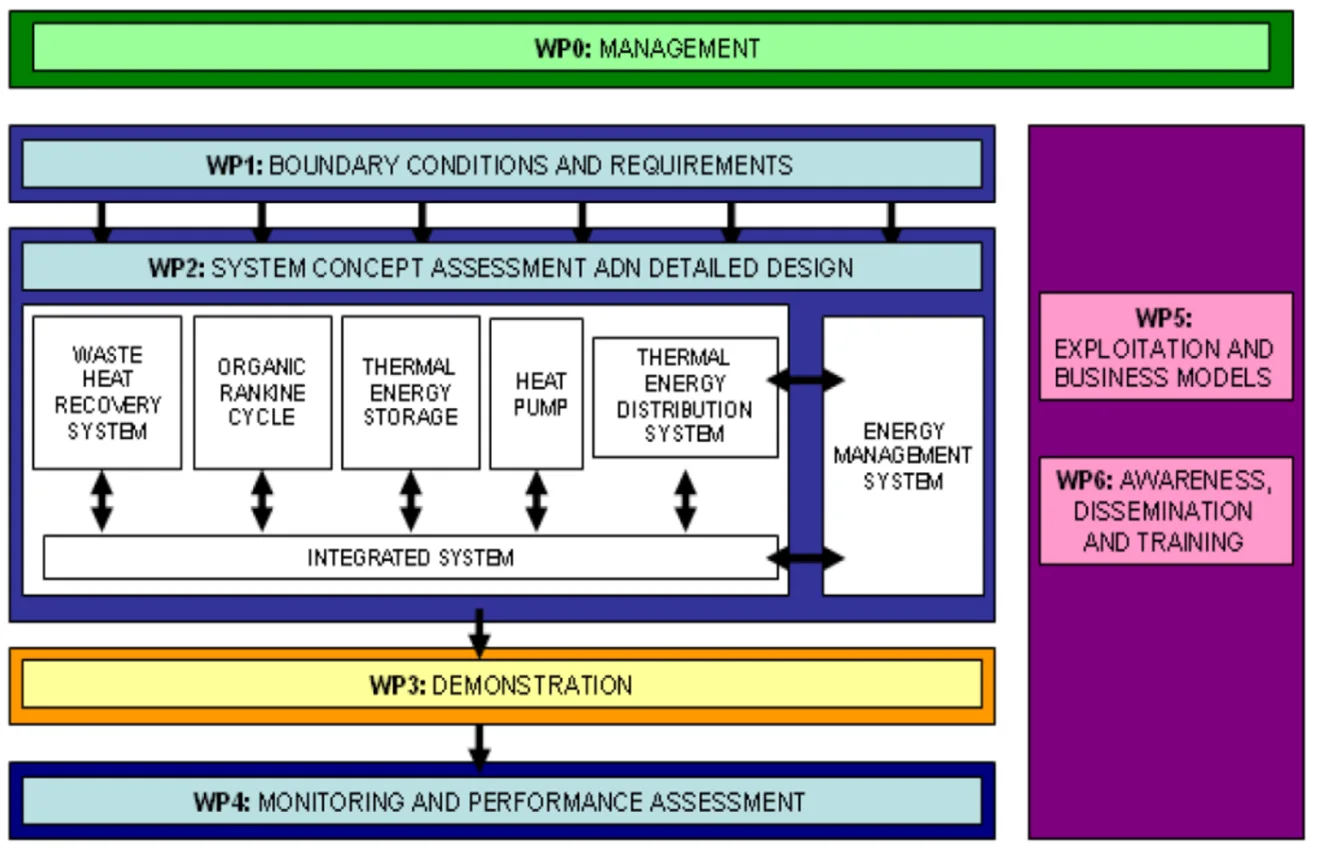
The project was organised into several work packages covering technology assessment, system design, construction, monitoring, and dissemination. Work Package 2 focused on system concept assessment and final design of the subsystems and the overall integrated system for both demonstration sites. The feasibility study conducted at the start of WP2 analysed different configuration options and defined specific requirements for each subsystem, based on overall system modelling and preliminary performance analysis. Conceptual and detailed design of the subsystems were developed in parallel within the consortium.
Arrange a free consultation
See how we can help your team work faster, without risk or expense.
CIM-mes Projekt: role and technical contributions
Task 2.8 – Energy Management System
CIM-mes Projekt led Task 2.8, whose objective was to develop a self-learning dynamic energy district management system based on Artificial Intelligence algorithms. The system was designed to analyse and optimise all energy flows between generation assets, electrical and thermal grids, and building-level consumers.
The EMS used Artificial Neural Networks for meteorological prediction and energy demand/production forecasting, enabling the system to select in advance the best simultaneous storage and energy use strategies. The objective function could be set to maximise energy efficiency, maximise economic profit, or fulfil other operator-defined criteria. Integration with the electricity price market was included so that the system could account for market signals when selecting the optimal operational strategy of heat pumps and other grid-connected assets.
Development methodology
The EMS was developed following a structured sequence of steps:
- Definition of the main working principles of the system
- Selection of AI methods and algorithm architecture
- Construction of the algorithms
- Training on input/output data from the plant simulator
- Testing under unknown and uncertain operating conditions
- Simulation of emergency situations
- Definition of analog and digital measurement points required by the control and regulation devices
- Implementation of the algorithms
The ANN models underpinning the EMS were built using a multi-stage approach. In the first stage, model inputs and outputs were selected, the operational range was defined, and the ANN architecture was established. In the second stage, the ANN was trained on simulation results from full-scale models developed in TRNSYS, HYSYS, and Matlab/Simulink. In the third stage, the ANN was re-trained using real data from the plant monitoring system.[1]
Brescia demonstration site
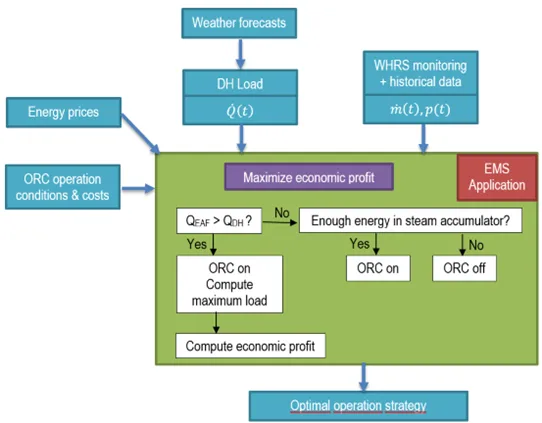
At the Brescia site, the EMS application determined the optimal operational strategy for the ORC unit with the objective of maximising economic profit. This strategy was delivered to the plant operator as a decision-support output, with the operator retaining final authority over operational decisions.
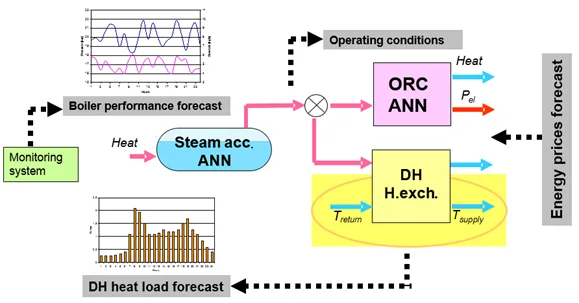
The system processed energy flow data from the steel foundry and ORC installation, as shown in the schematic of energy flows developed for this site. The EMS block diagram defined the data inputs, the ANN processing layer, and the control signal outputs directed to the plant.
Kremsmünster demonstration site
The Kremsmünster plant comprised a gas-powered combined heat and power (CHP) unit with three gas engines, a gas-fired boiler, and a planned large-scale solar thermal installation with a seasonal thermal energy storage tank (TES). A heat pump was to be installed to discharge the TES to lower temperatures, using it as a bottom heat source.
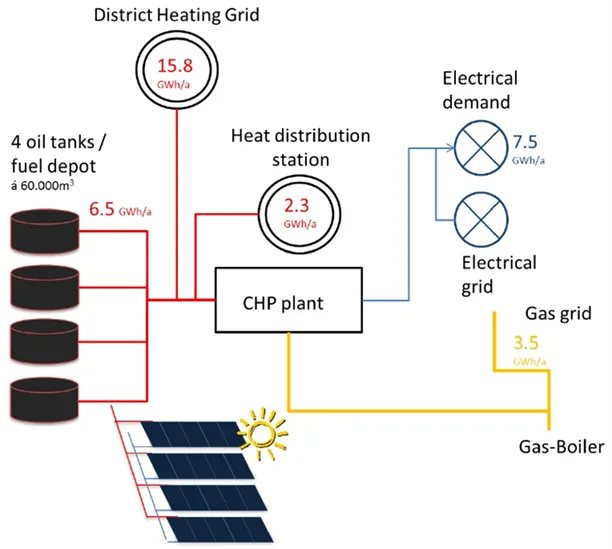
Two independent control systems were implemented. The first managed pump operation in the primary and secondary circuits of the solar system, starting the collector circuit pump when radiation exceeded a threshold dependent on ambient temperature. The second managed pumps and valves between heat loads and heat sources, collecting plant data (including TES temperature) and external data (including electricity prices) to control the entire system.
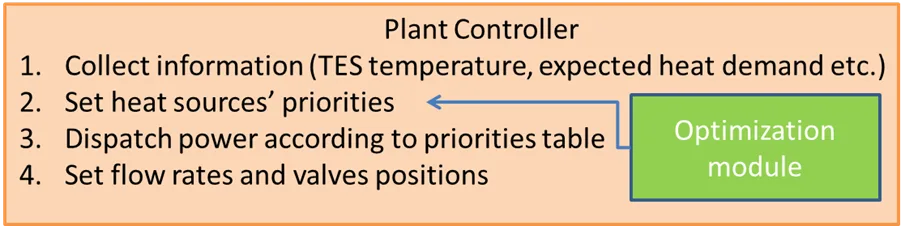
An optimisation module integrated with this controller determined heat source priorities through the following sequence at each time step:
- Calculation of the maximum possible thermal output for the TES and heat pump
- Estimation of specific heat production costs for each available source
- Assignment of dispatch priorities based on specific costs, with the lowest-cost source receiving the highest priority
Results of EMS simulations at Kremsmünster
Simulation results for the Kremsmünster demonstration site produced the following outcomes:
For short-term optimisation, simple modifications to the existing control system reduced overall heat production costs by approximately 6%. The optimisation module reduced operating costs by up to 27%.
The mid-term optimisation algorithm addressed the power dispatch problem by accounting for shutdown and startup costs of units such as the CHP and boiler, alongside maintenance cost dependencies. This approach enabled more accurate decisions about when to commit or decommit thermal generation units.
A novel district heating EMS architecture was proposed for the RAG site in Kremsmünster. The system enabled prosumer functionality at each network node, meaning that small waste heat sources and distributed renewable sources (such as solar collectors on residential rooftops) could be incorporated alongside larger generation assets. In the simulation scenario presented, 37% of heat was supplied from waste heat sources and 29% from renewable energy sources (RES). The results also confirmed that efficient utilisation of RES-originated heat requires adequate heat accumulation capacity.
Project outcomes and CIM-mes contributions
The PITAGORAS project produced validated system designs and operational EMS tools for two physically distinct demonstration configurations: an ORC-based waste heat recovery system and a solar-thermal district heating network with seasonal storage. Both sites operated under real industrial and climatic conditions, providing datasets for ANN training and model validation.
CIM-mes Projekt delivered a self-learning EMS capable of forecasting energy production and consumption, optimising dispatch across multiple heat sources, and adapting to real operating data through progressive ANN re-training. The system architecture developed for Kremsmünster demonstrated that a single EMS framework can accommodate heterogeneous heat sources, prosumer nodes, and market-linked optimisation criteria within a unified control structure.
The quantified performance improvements — up to 27% reduction in operating costs and significant increase in waste heat and RES utilisation — were obtained through simulation using models validated against plant data. The EMS concept developed within Task 2.8 provided the technical basis for further commercial development of AI-based energy management tools for district heating applications.
See for yourself if CIM-mes meets your expectations.
Book a meeting with us!